How to Choose the Right Pallet Scales Without Overpaying
Finding the right pallet scale for sale feels straightforward until you’re buried in specs, capacity ratings, and feature lists you don’t fully understand. Here’s the truth: most buyers overpay for features they don’t need or underbuy and end up replacing equipment too soon.
The smart move is knowing exactly what your operation demands before you spend a dollar. This guide cuts through the noise and gives you a clear path to the right pallet scale at the right price.
What Is a Pallet Scale and Why Do You Need One?
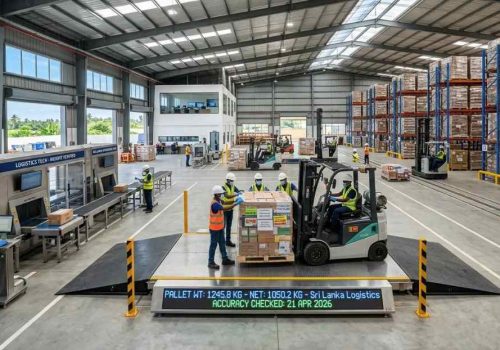
A pallet scale is a heavy-duty floor-level weighing platform designed to handle full pallets of goods. It eliminates the need to break down loads just to get an accurate weight.
For warehouses, distribution centers, and shipping operations, accurate pallet weighing directly impacts:
- Freight cost calculations
- Inventory accuracy
- Shipping compliance
- Load capacity planning
- Billing accuracy with customers
In my experience, operations that skip dedicated pallet scales spend far more time correcting weight-related errors than they realize.
What Types of Pallet Scales Are Available?
Not every pallet scale fits every operation. Understanding your options saves both time and money.
-
Floor Pallet Scales
These are fixed, low-profile platforms ideal for high-volume facilities. They offer maximum stability and accuracy for consistent daily use.
-
Portable Pallet Scales
Portable models come with wheels and handles for flexible placement. They work well for facilities that weigh at multiple locations or don’t have a dedicated weighing station.
-
Pallet Jack Scales
These combine a standard pallet jack with built-in weighing capability. You weigh the load while moving it, saving significant time in fast-moving operations.
What Capacity Do You Actually Need?
Buying too little capacity is an obvious problem. But buying too much costs you money unnecessarily.
Most standard pallet scales range from 2,500 to 10,000 pounds. Here’s a simple way to decide:
- Weigh your heaviest typical load
- Add a 20 percent safety buffer above that
- Choose the next available capacity tier
Never operate a scale consistently at maximum capacity. It shortens load cell life and compromises accuracy over time.
Features of a Good Pallet Scale and a Great One
Price is only one part of the equation. These features determine long-term value.
-
Indicator Quality
A clear, responsive digital indicator reduces operator errors. Look for backlit displays, easy calibration functions, and unit switching between pounds and kilograms.
-
Load Cell Durability
Sealed, stainless steel load cells handle demanding environments far better than standard versions. If your facility deals with moisture or spills, this is non-negotiable.
-
Ramp Accessibility
Low-profile scales with loading ramps allow easy pallet jack access without lifting. This protects both your equipment and your team.
Where Should You Buy a Pallet Scale?
The supplier matters as much as the scale itself.
Look for suppliers who offer:
- Clear product specifications
- Calibration and technical support
- Transparent warranty terms
- Competitive pricing without hidden fees
- Replacement parts availability
In my experience, specialty scale suppliers consistently outperform general industrial equipment retailers in both product knowledge and after-sales support.
Conclusion
A pallet scale for sale is only a good deal if it matches your operational reality. Evaluate your capacity needs, environment, and workflow before committing.
The right pallet scale pays for itself quickly through improved accuracy, faster processing, and fewer costly errors. Take your time, compare specifications honestly, and invest in equipment built to last. Your operation deserves tools that work as hard as your team does.